Give Your Music and Arts Team a Shared Foundation for Learning That Connects, Challenges, and Includes More Students
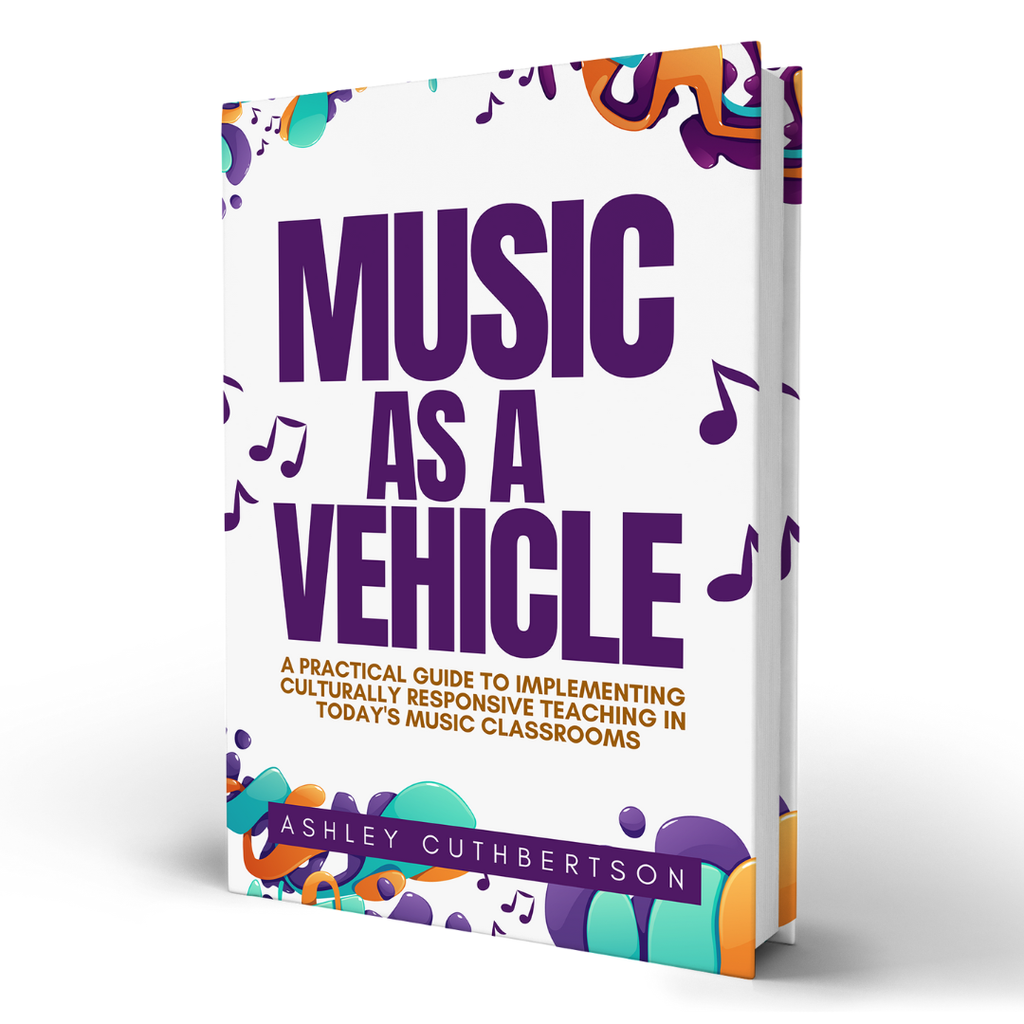
Bring Music As a Vehicle to your school, district, organization, or university as a practical professional development resource for music and arts educators.
Give your teachers a shared framework, common language, real classroom examples, and implementation tools for designing music learning that is rigorous, relevant to students’ lives, responsive to who they are, and accessible without lowering expectations.
Music As a Vehicle: A Practical Guide to Implementing Culturally Responsive Teaching in Today’s Music Classrooms helps music educators take ideas like relevance, belonging, student voice, representation, access, and culturally responsive teaching and connect them to the everyday decisions they make in their classrooms.
Bulk pricing is available for orders of 10 or more copies.
Every copy includes access to the digital Music As a Vehicle Resource Toolkit.
Professional Development for Music Teachers Can Be Hard to Get Right
Your teachers are already balancing district initiatives, curriculum expectations, changing student needs, limited planning time, performances, and the daily work of teaching.
Then they attend professional development about culturally responsive teaching, equity, belonging, inclusion, or student-centered learning and are left with the harder question:
What does this actually look like in a music classroom?
General K-12 professional development rarely accounts for the realities of repertoire selection, ensembles, performances, artistic processes, curriculum design, assessment, and the many other decisions music and arts educators make every day.
Music As a Vehicle helps close that gap.
Instead of asking educators to translate broad instructional ideas into music teaching on their own, the book helps them think more intentionally about:
- who their students are and what they bring into the classroom
- whose voices, traditions, and perspectives are represented
- how students experience belonging and access
- how repertoire and curriculum connect to students and communities
- how to maintain strong artistic expectations while providing different pathways to success
- how instructional choices, policies, and practices affect individual learners
It gives teachers a practical way to move from “I understand why this matters” to “I can see what this could look like in my classroom.”
Why Bring Music As a Vehicle to Your Arts Team?
A practical resource for music teams. A useful entry point for broader arts teams.
Music As a Vehicle is written through the lens of music education, but the larger questions at the heart of the book apply across the arts:
Who are our students? Whose voices and perspectives are centered? Where do students experience access or barriers? How do we design rigorous learning that connects to the students and communities we serve?
That makes the book especially useful for music departments, and it can also serve as a shared starting point for multidisciplinary arts teams in music, visual art, theatre, and dance.
Music As a Vehicle has also been used across a full arts department to support broader conversations about relevance, belonging, access, representation, and how arts educators can make instructional decisions that respond to the students in front of them.
Give educators a shared foundation
When music and arts teachers are working from different ideas about what it means to make learning relevant, inclusive, rigorous, and responsive to students, it is difficult to build coherence across a department.
A shared professional text gives your arts team common language and a common point of reference for reflecting on practice, discussing challenges, and making instructional decisions together.
The goal is not for every arts classroom to look the same.
It is for music and arts educators to have a stronger foundation for making intentional decisions based on the students, communities, and teaching contexts in front of them.
Make professional learning practical
Your music and arts teachers do not need another resource that explains why something matters and then leaves them to figure out how to use it.
Music As a Vehicle connects culturally responsive teaching directly to the work of music educators.
That practicality was one reason Williamsville Central School District purchased copies for its music educators. Teachers described the book as accessible and immediately applicable, and during their book-study conversations they were already generating ideas they wanted to try in their classrooms.
Meet teachers at different starting points
Every arts department includes different levels of experience, confidence, and readiness.
Some music and arts educators may already be rethinking repertoire, student voice, access, assessment, and how students’ identities and experiences show up in learning.
Others may still be figuring out what those ideas mean for their own practice.
A shared professional development resource gives music and arts teachers space to read, reflect, talk with colleagues, and begin applying the ideas without requiring everyone to be in exactly the same place at exactly the same time.
Keep the learning going
A book stays with your music and arts educators long after the professional development day ends.
Music and arts teachers can return to Music As a Vehicle while:
- planning curriculum and units
- selecting repertoire
- examining classroom and program practices
- designing assessments
- thinking through access and student support
- talking through instructional questions with colleagues
And every copy includes access to the digital Music As a Vehicle Resource Toolkit, with planning tools, templates, examples, and resources designed to help educators move from reflection into application.
One Resource. Many Ways to Use It.
A bulk book order can support the professional learning structure that makes the most sense for your school, district, organization, or university.
Use Music As a Vehicle as:
A department-wide professional development resource
Give music and arts teachers a shared text they can refer to throughout the year as they think about curriculum, instruction, access, belonging, and student learning.
A music and arts teacher book study
Use the book with a small cohort, PLC, or full arts department to create structured opportunities for reading, discussion, reflection, and application.
Ongoing learning between district PD days
Keep the work moving when you only have limited opportunities to bring the whole department together.
A curriculum-development resource
Use the framework and Resource Toolkit as teachers examine repertoire, units, assessments, instructional practices, and program decisions.
Summer or asynchronous professional learning
Give music and arts educators flexibility to read and reflect independently before coming together for deeper discussion.
New-teacher onboarding
Introduce music and arts educators entering your department to important conversations about relevance, access, student identity, belonging, and instructional decision-making.
A college or university course text
Help future music and arts educators connect culturally responsive teaching theory with the decisions they will eventually make in real classrooms.
Want to Preview the Book First?
Considering Music As a Vehicle for your arts department, book study, or college course?
Preview a sample of the book to get a feel for the writing style, structure, and practical approach before you decide whether it is the right fit for your music and arts educators or students.
How Institutions Are Using Music As a Vehicle
A District-Wide Resource at Williamsville CSD
Williamsville Central School District purchased 55 copies of Music As a Vehicle for its music educators and began using the book through small-group book studies.
Their first group included educators across career stages, from newer teachers to 30-year veterans. The district structured opportunities for teachers to discuss what stood out, hear different perspectives from colleagues, and identify ideas they wanted to try in their own classrooms.
The response from that first group was strong. Teachers found the book practical, accessible, and immediately applicable. The district planned additional book studies with the goal of bringing more of its 55 music educators into the conversation before moving into deeper professional learning.
District Director of the Arts, Business & Marketing, and Family & Consumer Sciences, Jamie Pitnell, also noted that the book helped lower a common barrier to this kind of professional development: teachers could examine their existing practice without feeling as though they were being told everything they had done before was wrong. Instead, the book helped them consider how they could build on what they were already doing to better support individual students.
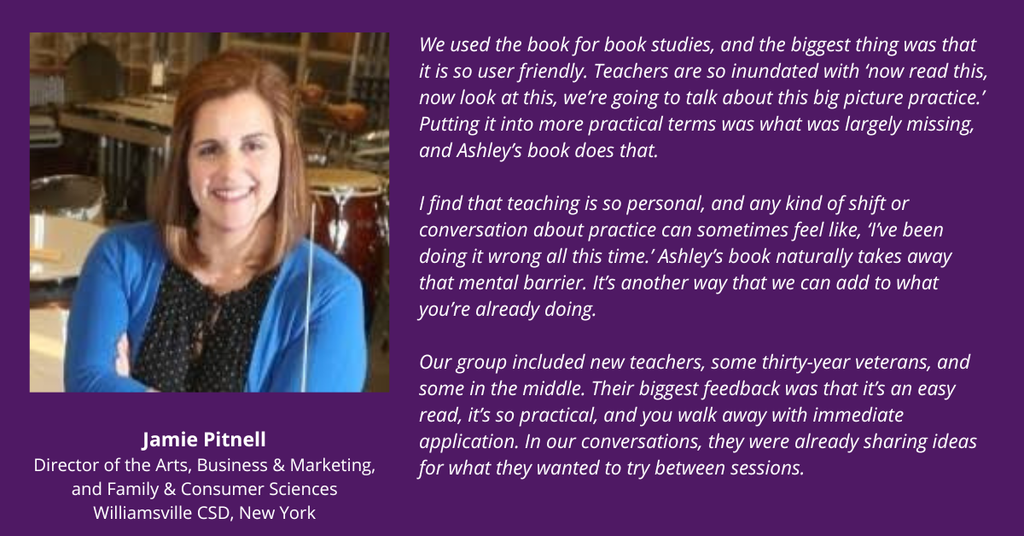
“It’s so practical, and you walk away with immediate application.”
Jamie Pitnell
Director of Arts, Business & Marketing, and Family & Consumer SciencesWilliamsville Central School District, New York
A Course Text at Portland State University
Assistant Professor of Music Education, Mari Schay, has used Music As a Vehicle in culturally responsive music teaching coursework at Portland State University.
Rather than using the book to replace more research-oriented texts, she uses it alongside them.
Students begin with Music As a Vehicle to center identity work, move into Zaretta Hammond’s work for more research-oriented content, and then return to Music As a Vehicle to put that research into the context of music teaching practice.
For future teachers who may have limited classroom experience, that bridge between theory and application helps them understand why the ideas matter and begin imagining what they could actually look like in practice.
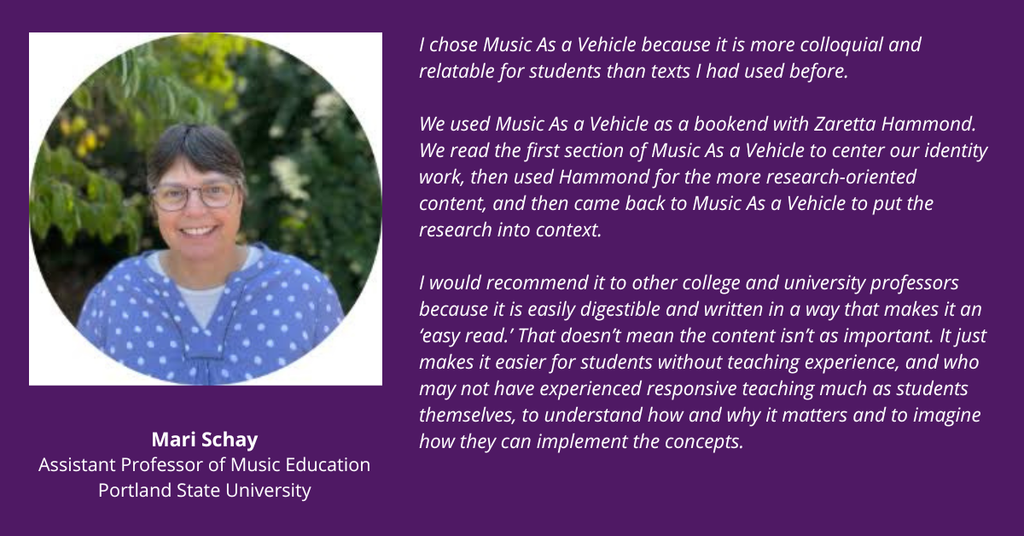
“It was easily digestible and written in a way that makes it an ‘easy read’ for students without teaching experience, and who may not have experienced responsive teaching much as students themselves, to understand how and why it matters and to imagine how they can implement the concepts.”
Mari Schay
Assistant Professor of Music Education – Portland State University
For Colleges and Universities
Music As a Vehicle can be used as a course text in undergraduate and graduate music education programs.
Its conversational writing, classroom examples, practical framework, and implementation resources can help students connect research and theory with the realities of curriculum, repertoire, instruction, classroom culture, access, and student learning.
It can work especially well as a companion to more research-focused texts by helping future music and arts educators move from understanding the ideas conceptually to imagining how they could apply them in their own classrooms.
Bulk pricing is available for institutional orders of 10 or more copies.
Want Ashley to Guide the Conversation?
Your team can facilitate its own learning around Music As a Vehicle using the book’s included reflection questions, or Ashley can support the experience directly.
Kick off the learning with a Book Talk
A Book Talk can introduce your team to the core ideas in Music As a Vehicle, build interest in the reading, and give music and arts educators a shared starting point before they begin.
Bring Ashley in after your team has read
A Book Talk can also be especially powerful after music and arts educators have read or engaged in a collaborative book study.
Your music and arts educators will engage directly with Ashley, discuss what stood out to them, ask questions, and think more deeply about how they want to apply the ideas in their arts classrooms and programs.
Have Ashley facilitate the book study
Schools, districts, and organizations can also bring Ashley in to facilitate the Music As a Vehicle book study itself, guiding educators through structured reading, discussion, reflection, and application.
Learn more about Book Talk Sessions | Explore Professional Learning Services
About Ashley

Ashley Cuthbertson (she/her), M.Ed., NBCT is the author of Music As a Vehicle, a former PK-12 music educator, speaker, and Founder & CEO of A. Cuthbertson Consulting.
Her work is built on a single belief: the arts are a powerful vehicle for success in learning, career, and life.
She partners with schools, districts, and organizations nationally to develop equitable arts program policies, cultivate affirming learning environments, and design culturally responsive arts curriculum and instruction that helps all learners thrive through the arts.
Need Help Making the Case for the Purchase?
Download the Bulk Book Advocacy Letter
Need approval from a supervisor, professional learning office, department chair, or another decision-maker?
Use this editable advocacy letter to explain how Music As a Vehicle can support professional development for your music and arts educators, provide practical implementation resources, and create a shared foundation for continued learning across your department.
Ordering Is Simple
1. Request a Quote
Complete the institutional book-order form and select ‘Request a Quote’.
Bulk pricing is available for purchases of 10 or more copies.
2. Place Your Order
Once you approve your quote, return to the same form and select ‘Place Order’.
You can also tell us about any purchasing, procurement, or vendor requirements your institution needs us to complete.
3. Complete Payment and Receive Your Books
Payment is available by:
- credit card
- ACH
- check
- purchase order
A. Cuthbertson Consulting can also provide a W-9 and complete vendor paperwork requested by your school, district, university, or organization.
Once payment and purchasing requirements are complete, paperback books will be shipped to the U.S. address provided with your order. Tracking information will be sent when the order ships. *For locations outside of the U.S., access to the eBook will be provided.*
Frequently Asked Questions
Bulk pricing is available for orders of 10 or more copies of Music As a Vehicle.
Pricing varies based on the number of books purchased. Request a quote to receive a price.
Yes. Schools, districts, universities, and organizations can still order fewer than 10 copies, including institutions that need to pay by purchase order.
Orders of fewer than 10 copies are sold at the regular book price and do not qualify for bulk pricing.
Yes. Payment can be made by credit card, check, ACH, or purchase order.
Yes. We can provide a W-9 and complete vendor forms as needed during the purchasing process. You can tell us what documentation your institution requires when requesting your quote or placing your order.
Institutional book orders are currently shipped within the United States to one address per order. For locations outside of the U.S., bulk access to the eBook is available.
Yes. Every copy of Music As a Vehicle includes access to the complete digital Resource Toolkit. Instructions for requesting access are included inside the book.
Yes. Schools, districts, universities, and organizations can structure their own book studies, PLC conversations, or professional development experiences around Music As a Vehicle using the provided reflection questions inside the book.
Yes! Ashley offers facilitated Music As a Vehicle book studies for teams that want support guiding the reading, discussion, reflection, and application. Please review the professional learning services information here.
Yes! Some organizations use a Book Talk before reading to introduce the book and kick off the learning.
Others schedule a Book Talk after educators have read so the team can engage directly with Ashley, discuss what they learned, ask questions, and think through how they want to apply the ideas. Please review the book talk session information here.
Yes. Several districts have done so. The book itself was written specifically for music educators, so its classroom examples and applications are rooted in music education.
However, the larger conversations around student identity, relevance, belonging, representation, access, rigorous learning, and responsive instructional decision-making can also support broader arts-department professional learning.
If you are looking for professional development designed specifically for a multidisciplinary team of music, visual art, theatre, and dance educators, Ashley also offers arts-wide professional learning. Explore professional learning services here.
Yes! A book preview is available so you can review a sample of the text before deciding whether Music As a Vehicle is the right fit for your school, district, organization, or college course.
Yes! Colleges and universities can order copies for undergraduate courses, graduate courses, cohorts, and other institutional learning experiences.
Orders of 10 or more copies qualify for bulk pricing.
Depending on your district’s approved plan and local requirements, Title II-A or Title IV-A funds may be possible funding sources for professional learning or arts education activities that include Music As a Vehicle. Confirm allowable uses with your district’s federal programs or grants office.
If you need to make the case internally, you can also download the Bulk Book Advocacy Letter to help explain the professional learning value of the purchase.
All book sales are final. Returns and refunds are not available.
Ready to Bring Music As a Vehicle to Your Team?
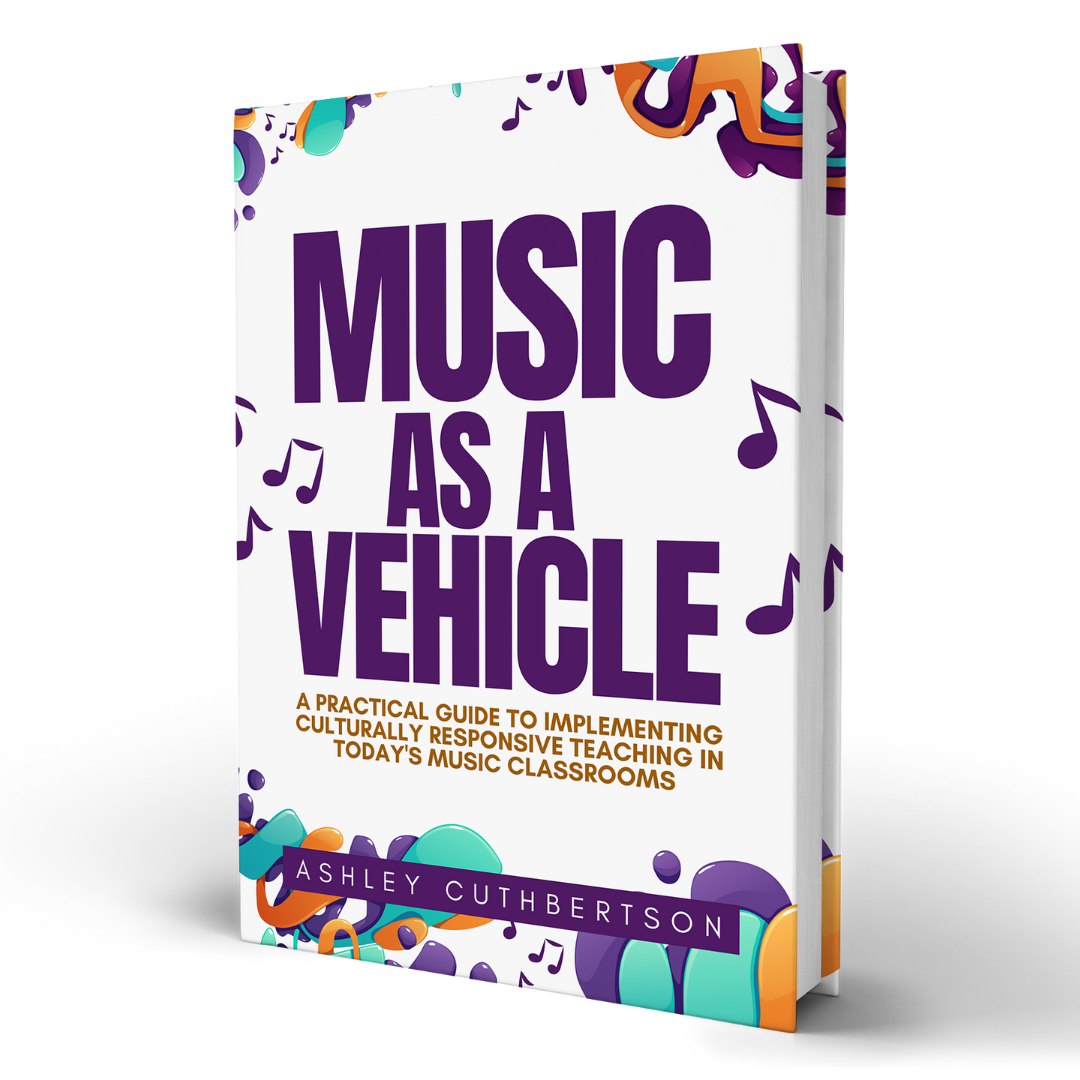
Give your music and arts educators a shared resource they can read, discuss, apply, and return to as they design learning that is rigorous, relevant, and responsive to the students they teach.
Bulk pricing is available for orders of 10 or more copies.
Schools • Districts • Educational Organizations • Colleges & Universities