A Hands-On Curriculum Design Workshop for Arts Educators
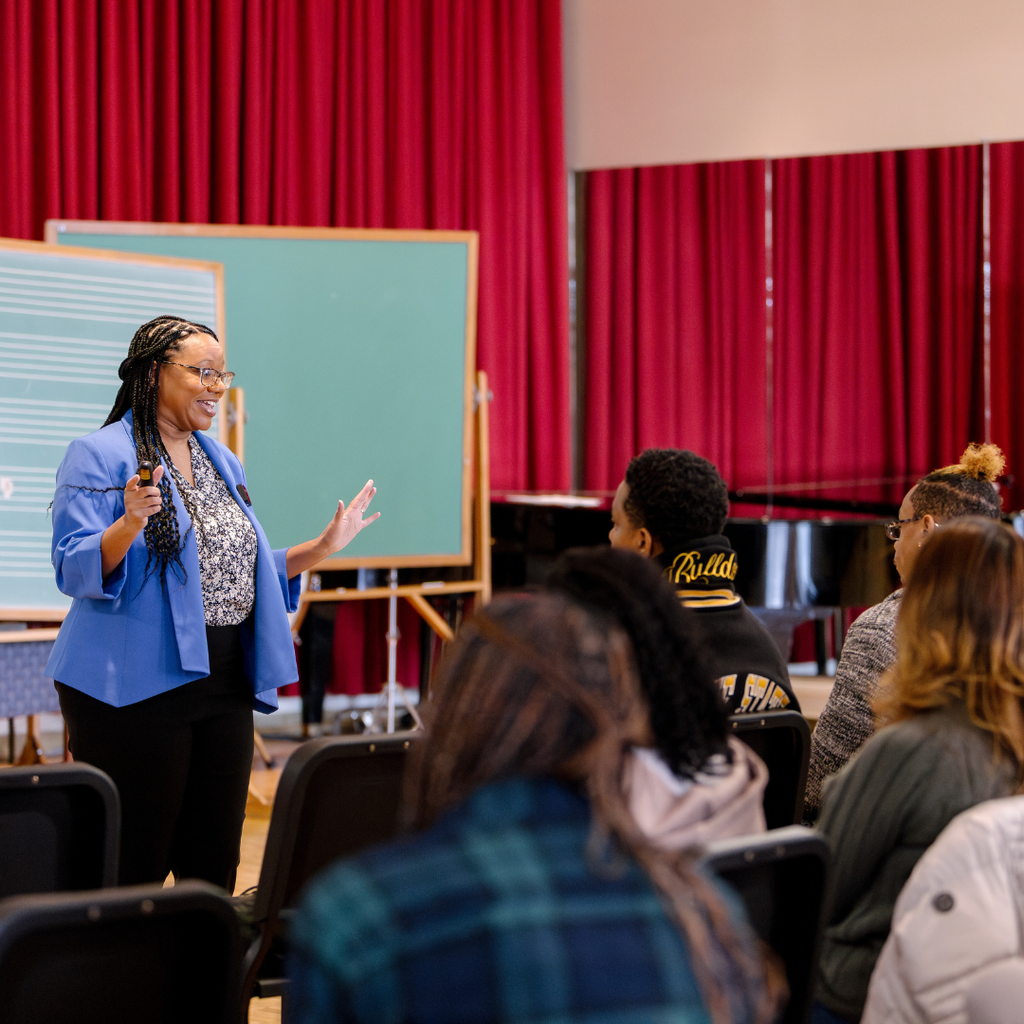
Design a cohesive arts unit for what’s relevant for your learners, map out the full lesson sequence, and complete your first ready-to-teach instructional plan, all through a process you can use again.
Bring the pieces of meaningful arts learning together
Designing Arts Learning that Matters helps arts educators bring artistic rigor, culturally responsive and relevant teaching, diverse learner needs, and student agency together into a cohesive arts unit for the learners they have in front of them.
This learning experience is designed for PK-12 arts educators across music, visual arts, theatre, and dance
You’re already working to embed culturally responsive and relevant teaching in your arts classroom. You care about students developing as artists, and you’re thinking about lots of pieces at once: engagement, access, representation, student voice, meaningful artistic choices, and the real experiences students bring with them into your arts classroom.
You’re also feeling a bit dizzy from trying all the things.
You’ve reconsidered repertoire or artistic content, created more opportunities for student choice, questioned whose perspectives are being represented, considered how accessible the learning is for students, and wondered how to connect the work to their lives beyond your classroom.
I created this workshop with you in mind. This workshop is for the arts educator who is passionate about their art form and their students, already experimenting and refining their practices, and wants a stronger process for bringing all the various pieces together cohesively across a full unit of study.
What you’ll learn and design
01
Use your arts standards as the foundation for meaningful student learning
Connect artistic knowledge and skills to relevant, real-world contexts and big ideas so you can make clearer decisions about what students should know, understand, be able to do, and experience through the unit.
02
Design with the actual learners in front of you in mind.
Use what you know and understand about your students’ strengths, needs, cultures, interests, prior arts experiences, and access needs so relevance, engagement, and support are built into the design from the beginning.
03
Select artistic content intentionally
Choose the artists, repertoire, artworks, texts, movement traditions, materials, cultural contexts, and artistic experiences that best support the unit so the content students encounter contributes to the larger learning you want them to understand.
04
Define meaningful artistic learning and authentic evidence of that learning
Clarify what students should know, understand, and be able to do across the artistic processes, then determine how they’ll demonstrate that learning so you have a clearer picture of what student growth looks like and what evidence to look for.
05
Design the artistic journey from beginning to end
Sequence lessons, practice, artistic experiences, formative assessment evidence, and opportunities for student decision-making so you can see how the learning builds across the unit and stop planning lesson to lesson.
You’ll leave with work you can actually use
- Your completed unit overview
The foundation of your unit, including standards, the big idea, artistic content, learning objectives, and authentic culminating assessment.
- Your complete lesson overview sequence
The full sequence showing how the learning develops from the beginning of the unit to the end.
- Your ready-to-use instructional plan for lesson 1
Lesson 1 translated from the larger unit design into actual daily instruction.
- A curriculum design process you can repeat again and again
You’ll also have worked through the Arts As a Vehicle™ curriculum design process yourself, so you know how to use the process again when you’re ready to develop another unit.
✅Unit design is complete
✅Full lesson sequence is mapped out
✅First daily instructional plan is complete.
Sign up to get notified about the next virtual cohort!
Creating the kind of arts learning you believe in can get complicated quickly
You may have arts standards, a pacing guide, existing units, projects, repertoire, texts, artworks, choreography, performances, or years of lesson ideas.
But you’re also thinking about culturally responsive and relevant teaching, access for diverse learners, student engagement, meaningful choice, assessment, artistic development, and what the particular students sitting in front of you need from the learning.
Meanwhile, you’re teaching all day and after school preparing rehearsals, performances, productions, exhibitions, showcases, materials, and everything else that comes with running an arts program.
You’re also reading IEPs and 504 plans, thinking through accommodations and modifications, supporting multilingual learners, and teaching students who may walk into the same classroom with completely different levels of prior arts experiences.
It’s a lot. I know because I taught in it, too.
I know what it’s like to be responsible for students all day, have performances and other responsibilities hanging over you, and still be the person creating the curriculum to figure out what students should learn, what I’m going to teach next, and how I’m supposed to fit it all together seamlessly.
The bigger challenge is figuring out how all those pieces fit together to create an engaging learning experience students are excited to participate in.
“Bringing all the pieces together can feel like an uphill climb”
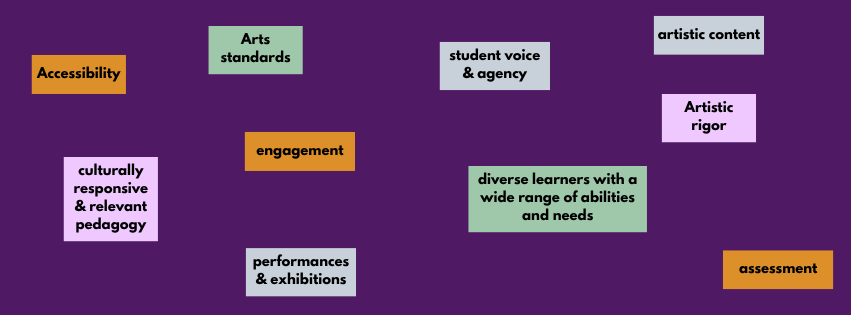
And that means working through real questions as you design:
- What will connect with these students?
- Where can they make meaningful choices?
- How much structure do they need?
- How do you increase access while maintaining strong artistic expectations
Plus, students need to develop technique, build artistic knowledge, practice, give and receive feedback, create, perform, produce, present, respond, connect, and become increasingly independent as artists.
You have all these pieces, responsibilities, and things you care about. Now you need a way to bring them together cohesively without burning out.
“Before, I was curious about how to sew together all the elements of culturally responsive teaching (meaningful/authentic/real world application, brain based approach, equitable and inclusive practices) as opposed to smaller units or activities.
Ashley provided expert support in helping me find the overarching key questions and enduring understandings that connected our units and activities. This really helped me enhance the learning that was already happening in my classroom with a more relevant and meaningful framework for students.
One major outcome from our coaching was the instructional planning document that we spent time fleshing out. We worked together to create the core goals and summative assessment to plan backwards from. This template itself is a very helpful tool for organizing curriculum and connecting the various pillars of culturally responsive teaching into practice. Students can better connect our activities to one another and to their lives outside of school.”
Krystal Morin
6-12 General Music Teacher and Choral Conductor
Why I created Designing Arts Learning that Matters
There are plenty of places to find lesson ideas across arts disciplines. I created this workshop because arts educators also need a process for making curriculum decisions that connect those ideas into learning that’s meaningful for their learners over time.
Get notified about the next cohort!
Meet Your Facilitator
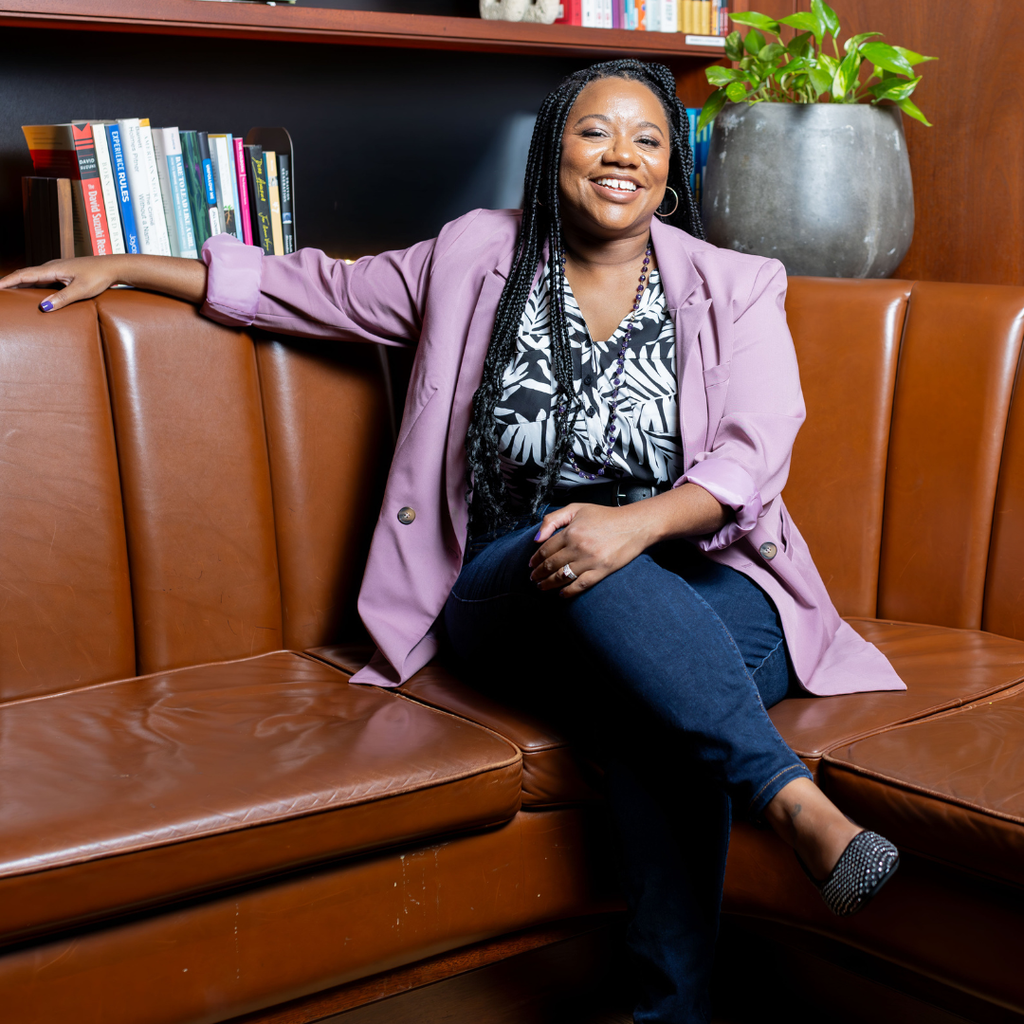
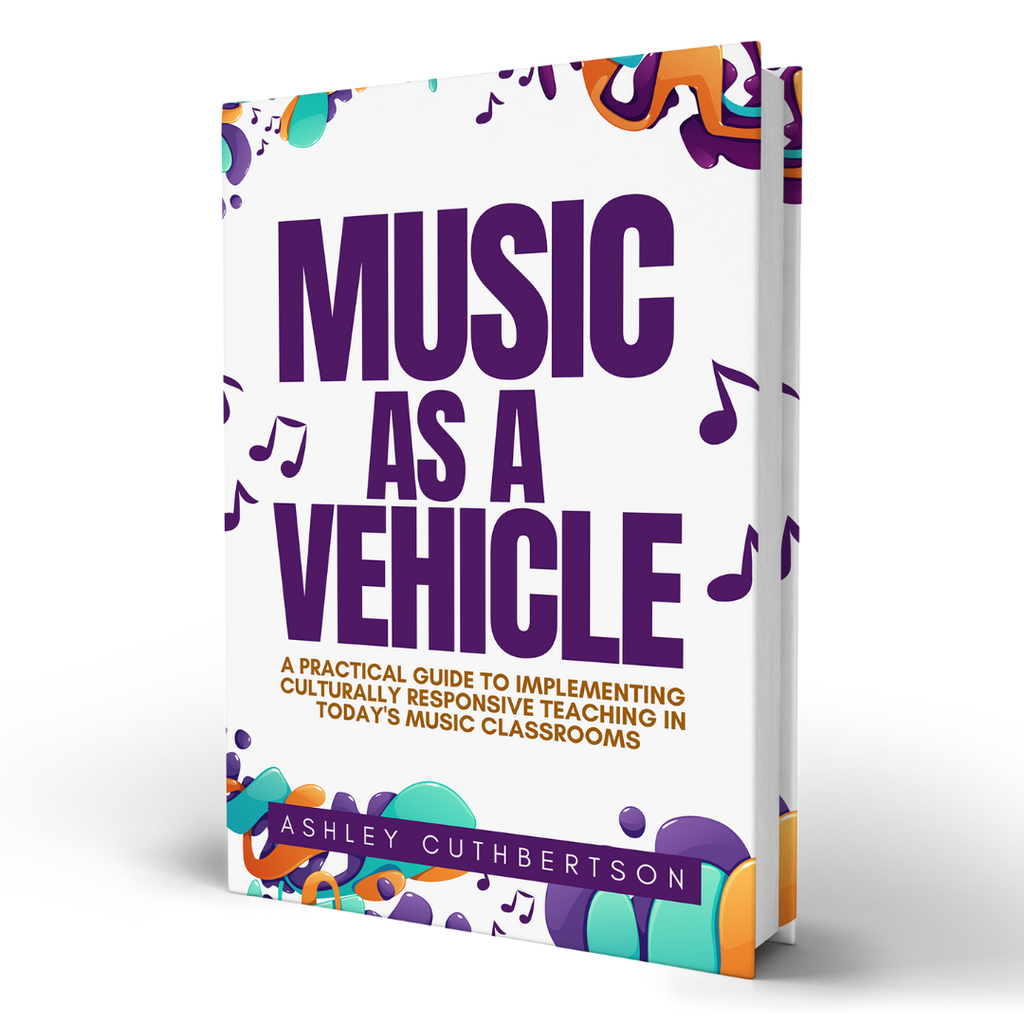
Ashley Cuthbertson (she/her), M.Ed., NBCT, is a nationally recognized arts education consultant, author of Music As a Vehicle, former music educator, and creator of the Arts As a Vehicle™ framework. Her work helps arts educators and leaders translate culturally responsive and relevant teaching into practical curriculum and instructional decisions.
How You’ll Spend Your Time
Pre-work
Before we meet, you’ll read selected chapters from Music As a Vehicle to prepare a brief Class Portrait so you’re clear on the learners you’re designing for, gather your standards and curriculum documents, and choose a starting point for the unit.
Session 1
You’ll use your arts standards to unpack and uncover a real-world connection for your students, design objectives for artistic learning, and design a summative assessment that’s an authentic demonstration of learning.
You’ll learn the process, see examples, have time to work, and get peer feedback so you can leave Session 1 with your Unit Overview in place.
Between Sessions
You’ll use the Arts As a Vehicle™ design lenses to examine your unit for relevance, rigor, access, agency, and transfer.
Core + Personalized Support registration participants also submit their Unit Overview for personalized feedback from me before Session 2.
Session 2
You’ll work backward from your Unit Overview to develop your lesson sequence by determining how the learning will develop, what practice experiences students need, how you’ll gather formative assessment evidence, what multiple entry points students will need, and how to ensure that the artistic process is grounded in relevant, real-world contexts.
Then you’ll break down the first lesson and write the full instructional plan.
You’ll learn the process, see examples, have time to work, and get peer feedback so you can leave Session 2 with your completed Lesson Overview Sequence and Full Lesson Plan for Lesson 1.
Implementation Lab
*Core + Personalized Support participants only
Following the workshop, participants who register for Core + Personalized support will meet for a group coaching session to work through what comes up as you implement the unit and lessons with your students. You’ll get coaching from me during the group session as you work through questions related to pacing, student response, access, engagement, formative evidence, or something that didn’t work the way you expected.
“The most exciting/inspiring takeaway for me was the amount of knowledge we are able to give students beyond our music curriculum. That had already changed how I think about lesson plans and I am having a blast.
I have already changed how I think about lesson planning around the music we are learning. My students are writing a song to help inspire others to change the way they use single use plastic in their everyday lives and are so excited about the power of music to create real change in their community. This is just one example of a very real and authentic outcome. We are loving it!
She really broke everything down into bite sized steps that made it feel so much less overwhelming.”
Annie Gnojek
Co-Founder & Music Educator
Arts learning can be responsive, relevant, and accessible without compromising rigor
Maintain strong artistic expectations while increasing access.
A student may need a different pathway, material, support, or way to demonstrate learning and still be working toward a meaningful artistic goal.
Create engagement without relying on gimmicks.
Some of the richest artistic learning involves repetition, sustained attention, practice, revision, and staying with something long enough to get better at it.
Give students agency with enough structure to make it meaningful.
Choice becomes more powerful when students have the artistic knowledge, skills, context, and feedback they need to make thoughtful decisions.
Connect learning to students’ lives while expanding what they encounter.
Culturally responsive and relevant teaching can begin with who students are while also introducing them to artists, traditions, ideas, perspectives, and ways of making art they may not encounter on their own.
Through all of that, students are still developing as artists.

“The power of better understanding the backgrounds and lives of our students to make the learning experience more engaging and rigorous.
I have seen examples in our schools of teachers using culturally responsive principles and UDL to better identify barriers to learning and reach more of our students.
Ashley is great! She really listens to our needs and makes sure to provide learning experiences that address them.”
-Dr. Ed Stephenson
Previous Supervisor for Fine and Performing Arts Prince William County Public Schools
Eight hours of protected time to do curriculum work you already need to do
Taking eight hours over multiple days to plan is a real commitment and I know that.
During these sessions, you’re doing work you already need to do by building an arts unit you already need to teach. Together, you’ll have a clear process, tools, templates, arts-specific examples, feedback, and collaborative planning time with other arts educators working alongside you.
Earlier this summer, I sent a survey to more than 1,600 arts teachers in my audience asking what they needed as they worked to make their programs more responsive, engaging, and relevant.
One arts educator put the time challenge plainly:
“Time! There isn’t enough to get it all done.”
And this same thing came up over and over again. What also came up was that having units and lessons to work from would help them feel less like they were constantly starting from scratch.
I can’t promise you won’t have another late planning night, but I can help you learn a process to build the larger unit so that every daily lesson doesn’t require you to figure out the whole direction of the learning over and over again.
A clearer process for curriculum decisions you’re already making
You’re probably already doing a significant amount of curriculum design without anybody ever calling it that.
Every time you decide what students should learn, which artistic content they’ll encounter, how the learning will build, how they’ll demonstrate what they know, and what supports they’ll need, you’re making curriculum decisions.
I want you to have a process that helps you make those decisions with greater intention, especially when there isn’t one obvious right answer.
Choose the level of support that works for you
**Each cohort is limited to 15 total participants in order to ensure the best collaborative experience.
Core
$650
or 2 payments of $325
✓ Required pre-work + Class Portrait
✓ Two four-hour live workshop sessions with guided curriculum design time
✓ Arts As a Vehicle™ curriculum design workbook and planning tools
✓ Arts-specific examples across music, visual art, theatre, and dance
✓ Protected time to build your own unit
✓ Peer collaboration and feedback
✓ Completed Unit Overview
✓ Complete Lesson Sequence Overview
✓ First daily instructional plan
✓ A repeatable curriculum design process
✓ Limited-time session replay access
✓ Professional development certificate documenting 10 hours of learning
Pay in full or split into two monthly payments of $325.
Additional flexible payment options may be available at checkout via Klarna, Affirm, or Afterpay.
Core + Personalized Support
$1,000
or 2 payments of $500
Limited to 8 participants per cohort
Everything included in Core, plus:
✓ Personalized Video Review and Feedback from Ashley
✓ Post-Workshop Implementation Lab
✓ Professional development certificate documenting 12 hours of learning
Pay in full or split into two monthly payments of $500.
Additional flexible payment options may be available at checkout via Klarna, Affirm, or Afterpay.
More about the Core + Personalized Support Registration
Personalized Support is designed for arts educators who want additional feedback and implementation support as they work through the process. Limited to 8 participants per cohort.
Everything included in Core, plus:
Personalized Unit Feedback
After Session 1, submit your Unit Overview for a personalized recorded review from me via video.
I’ll put your unit on my screen, work through it carefully, and give you specific feedback to help you strengthen the design before Session 2.
You’ll receive the recording so you can revisit the feedback as you revise.
Post-Workshop Implementation Lab
Once you’ve begun implementing your unit, we’ll meet again for live group coaching.
Bring what you’re noticing once the curriculum meets your real students. We can work through questions related to pacing, student response, access, engagement, formative evidence, or something that didn’t work the way you expected.
Participants who complete Core + Personalized Support receive a professional development certificate documenting 12 hours of professional learning
Want this for an arts team?
A music educator may be developing learning around a concert cycle while a visual art educator is building toward an exhibition, a theatre educator is designing around a text or production, and a dance educator is developing technique and choreography across a unit.
The artistic content is different, but educators across an arts department are making many of the same kinds of curriculum decisions.
Arts As a Vehicle™ gives educators across an arts department a shared process and common language while allowing each person to design for their own discipline, learners, standards, and teaching context.
Schools, districts, and arts organizations may enroll multiple educators in a public cohort.
Private workshop options are also available for organizations that want to bring the experience directly to their team on their schedule.
“In the past when we’ve had workshops on Culturally Responsive Teaching, our community has at times gotten defensive and closed off. I really appreciated your approach. I think its really helpful to show examples of how the repertoire often being utilized in the classroom (Beethoven, for example) can be taught in a culturally responsive way. I heard a lot of positive feedback. I hope they will utilize some of your materials/approaches in their classrooms.”
–Deanna Kennett, Director of Ensemble Connect at Carnegie Hall
A few things to know before you register
Required Book
Participants need their own copy of Music As a Vehicle to complete the required pre-work.
The book is purchased separately and is not included with workshop registration.
You do not need to read the entire book before the workshop.
Professional Development Certificate
Participants who complete the Core Cohort receive a certificate documenting 10 hours of professional learning.
Participants who complete Core + Personalized Support receive a certificate documenting 12 hours of professional learning.
Requirements for accepting professional development hours vary by school, district, state, licensing body, and other governing organizations. Please confirm the requirements that apply in your context.
Limited-time Session replays
Registered participants will receive limited-time access to replays of the live workshop sessions.
The replays are there so you can revisit the learning or catch up if something unexpected causes you to miss part of a session.
Designing Arts Learning that Matters is designed as a live, hands-on workshop, and you’ll get the greatest value by participating with the cohort, building your unit during the sessions, and taking advantage of the opportunities for discussion and feedback.
Refund Policy
All purchases are final and workshop registrations are non-refundable.
Please review the cohort schedule and your availability carefully before registering.
Upcoming Cohorts
2027 Cohorts
Summer 2027
Dates to be announced in November 2026
What arts educators and leaders say about working with Ashley
“We worked on creating a list of themes instead of a list of skills for our scope and sequence. You reinvigorated our enthusiasm for working across disciplines to provide our students with a big picture understanding of why they are learning what they are learning.
You are so good at breaking down concepts into practical chunks that are directly applicable to our time and place.”
Lisa Byrne
Arts Department Chair, Mayfield Junior School
“I learned how to utilize these practices in my own teaching in ways that I could easily pass onto the rest of my staff across our levels, disciplines, and sites.
Many things are more universally applicable than they seem when I am able to start from real world applications and the standard instead of working to adapt the standard to the curriculum I’m currently saddled with.“
Erik Ohlson
Visual and Performing Arts Teacher on Special Assignment, Santa Rosa City Schools
“I learned how to learn about your students and then using that info to inspire your instruction.
“I’ll think more about what my students need rather than what I THINK they need. I’ll listen more/ask more questions.”
HS Dance Teacher in New York
Frequently Asked Questions
Yes! The Arts As a Vehicle™ curriculum design process centers artistic learning and can be applied across all arts disciplines.
The artistic content and specific decisions will look different depending on what and whom you teach, and the workshop will include examples across music, visual art, theatre, and dance.
Although Music As a Vehicle was written for music educators, the assigned pre-work from the book focuses on foundational ideas behind culturally responsive and relevant arts teaching, including mindset and affirming learning environments.
During the workshop, we’ll apply those ideas through the Arts As a Vehicle™ curriculum design process across music, visual art, theatre, and dance. You do not need a music background to participate, and you do not need to read the entire book before the workshop.
No. You can bring an existing unit you want to improve, a standard you need to teach, a performance or project already on your calendar, a larger idea you’re interested in developing, or another meaningful place to begin.
We’ll do the design work together.
Yes! You’ll design from your actual teaching context.
Your starting point might be a concert cycle, exhibition, production, choreography project, short rotation, existing unit, standard, or another experience already built into your program. The process helps you determine the larger learning you want students to experience and design the artistic journey around the realities of your particular course or program.
You’ll leave with:
- a completed Unit Overview
- a complete Lesson Overview mapping the full sequence of the unit
- your first ready-to-teach daily instructional plan.
You’ll develop the remaining daily instructional plans on your own as you teach through the unit.
Designing for the learners in front of you is exactly what this process is about!
You’ll consider students’ strengths, prior artistic experiences, cultures, interests, language, access needs, IEPs and 504 plans, and barriers that may get in the way of meaningful participation while maintaining strong artistic expectations.
Yes! This workshop is specifically designed for arts educators who already care about this work and are already experimenting with their practice.
You’ll use what you already know and care about as the starting point, then work through a process for bringing those pieces together across a complete unit, all while you collaborate with other arts educators.
Both registration options include the full workshop and lead to the same core curriculum outcome.
Personalized Support adds a recorded review of your Unit Overview between Sessions 1 and 2 and participation in the post-workshop live Implementation Lab. We’ll select the date for the Implementation Lab during the workshop.
Before Session 1, you’ll complete the assigned reading, prepare a brief Class Portrait, gather the curriculum materials you’ll be working with, and identify a starting point for your unit. It should take around 1.5-2 hours to complete.
Between sessions, you’ll review your developing unit using the Arts As a Vehicle™ design lenses. It should take about 30-60 minutes depending on your context.
The two live sessions are where the majority of the guided curriculum-building happens.
Limited-time session replays will be available to registered participants.
They can help you catch up or revisit the learning, but the workshop is intentionally designed as a live, hands-on experience. Participating with the cohort gives you access to the collaborative planning time, conversation, and feedback that make up how this experience has been designed.
Yes! Participants who complete the Core Cohort receive a certificate documenting 10 hours of professional learning.
Participants who complete Core + Personalized Support receive a certificate documenting 12 hours of professional learning.
Because requirements vary, please check with your school, district, state, licensing body, or other governing organization to confirm whether and how those hours may be applied in your context.
All purchases are final and workshop registrations are non-refundable.
Please review your cohort dates and availability carefully before registering.
If you choose the two-payment option, your first payment will be charged when you register.
Your second payment will be automatically charged to the same payment method 30 days later.
For Core registration, that means 2 payments of $325.
For Core + Personalized Support, that means 2 payments of $500.
You do not need to return to the checkout page to make the second payment. It will be processed automatically.
Yes! Schools, districts, and arts organizations may enroll individual arts educators or inquire about group enrollment and private workshop options.
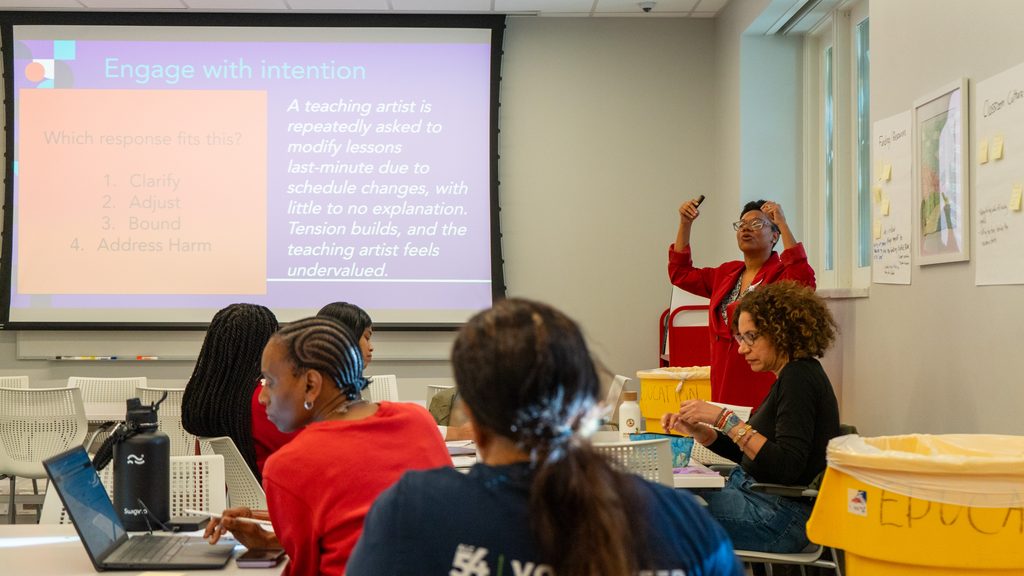
You already have a lot of the pieces.
You know your students.
You have artistic expertise.
You have standards, ideas, projects, repertoire, texts, artworks, movement traditions, materials, performances, and experiences you’ve gathered over the years.
And you’ve learned things about culturally responsive and relevant teaching, accessibility, engagement, student agency, and assessment that you want to apply more consistently.
Now let’s bring those pieces together into a cohesive arts unit for the learners in front of you.
Designing Arts Learning that Matters
A Hands-On Curriculum Design Workshop for Arts Educators
Design a cohesive arts unit. Map the full lesson sequence. Complete the first ready-to-teach instructional plan. Learn a process you can use again to create meaningful arts learning experiences for all learners.
Get notified for the next cohort!