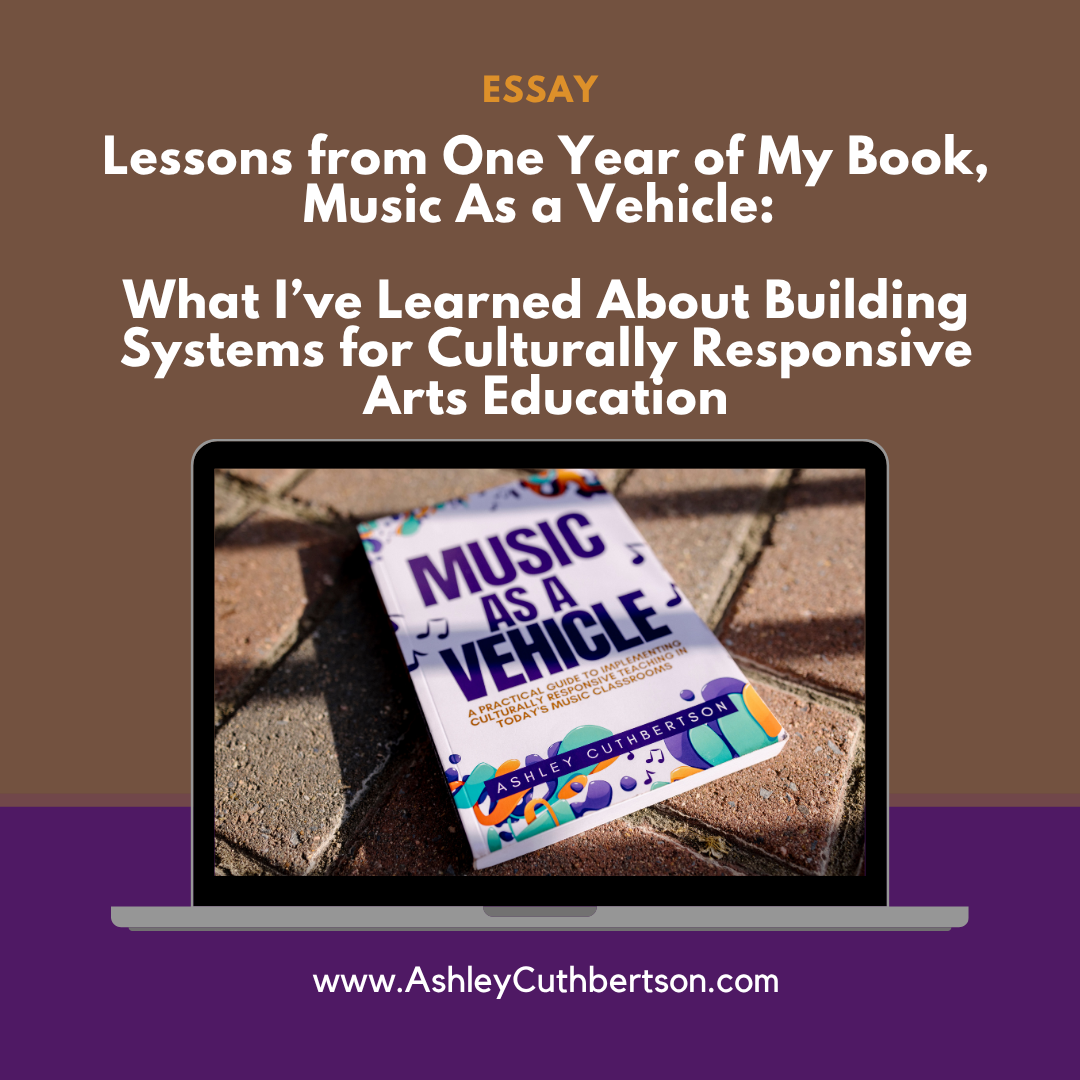
When I first wrote Music as a Vehicle, I had big hopes for the resource it would be. Seeing the book come to life in classrooms, with professors adding it to their syllabi, and arts leaders using it as a PD anchor still blows my mind.
A year later, this book has traveled across 35 states, 7 countries, and dozens of schools, districts, and universities. Each time someone emails to say they’ve used it in a book study, classroom, or arts team, I’m reminded that Music as a Vehicle isn’t just a book — it’s a movement.
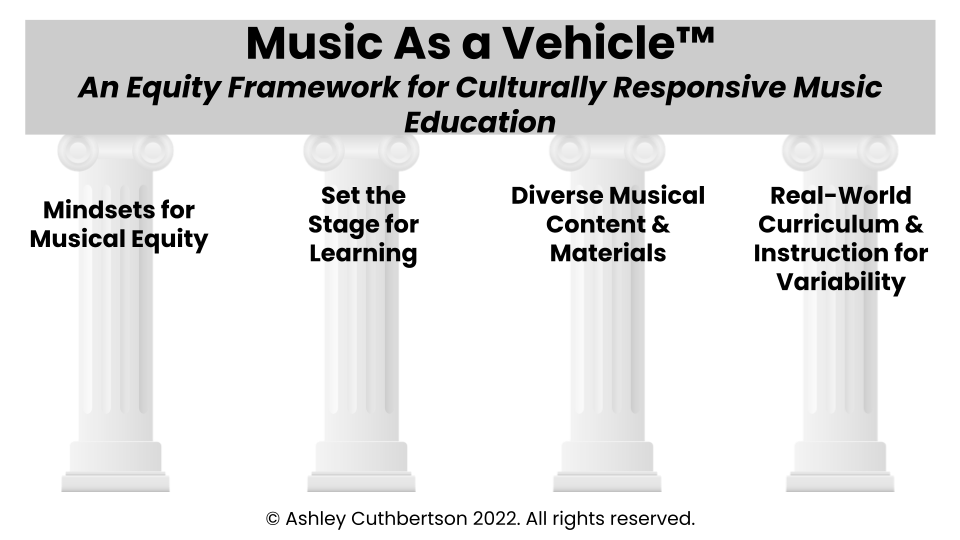
At its core, Music as a Vehicle represents a framework for culturally responsive arts education — a way to design learning environments, curriculum, instruction, and systems that honor the diverse and ever-changing needs of today’s learners. What began as a personal writing project has evolved into a foundation for how schools, districts, and universities can prepare arts educators for meaningful, equity-centered work.
So, as I reflect on this first year since publication, I’m thinking not just about what this book has meant for me as an author and consultant, but about what it’s teaching all of us about what it really takes to build systems that last.
The Impact: Let’s Talk About What the Numbers Represent
700+ copies sold, 35 states, 7 countries, 3 university adoptions, and countless classrooms. These numbers after just one year are exciting, but these numbers aren’t just metrics. They represent teachers, leaders, and students — each taking steps toward a more human, more relevant, more culturally responsive arts classroom.
Behind every sale is a story: a teacher who finally feels confident adapting curriculum to reflect students’ lived experiences; an administrator who’s realized equity work doesn’t have to be abstract; a professor preparing future educators to teach through an equity lens from day one.
To me, I don’t think about 712 products that were sold. What I really see is 712 programs, classrooms, and teams that are thinking differently about how they teach.
Because every single book didn’t just go to a bookshelf; it went to a person — a teacher, a leader, an entire department — who’s trying to reimagine what arts learning looks like for kids.
And if each of those educators serves hundreds of students a year — as most of us in arts classrooms do — then that’s tens of thousands of students who are being impacted through this framework.
That’s huge! And that’s really what that number means to me.
Those numbers are exciting, yes. But more than anything, they’re proof. Proof that our field is ready for this shift. Proof that teachers and leaders want the tools to make equity real — not just an abstract ideal. Proof that arts education can lead the way when it comes to culturally responsive, systems-level change.
And proof that despite the headlines, there are still leaders and teachers out there who are deeply committed to culturally responsive practice — not just talking about it, but building systems around it and providing their teachers with resources and support.
That’s what the data really says: that the desire for change is already here. The work now is building the systems and support that make that change sustainable.
3 Biggest Lessons From My First Year As a Published Author
As I reflect on Music As a Vehicle’s first year, three big lessons emerged that not only impacted me as an author and business owner, but also in the work I do supporting arts leaders and their teams:
- Authenticity Always Wins
- Vision Needs Structure
- Amplify the Movement
Lesson 1: Authenticity Always Wins
When I started writing Music as a Vehicle, I worried that my conversational tone might make it feel “less academic.” Would professors take it seriously? Would educators expect something more formal?
But every piece of feedback confirmed the opposite. Teachers told me, “This feels like you’re sitting beside me, talking me through it.” Professors said, “My students finally get it — because it sounds like how they think.”
That’s when it clicked: authenticity wins. Every time.
Because people don’t need another polished theory that feels out of reach. They need real people modeling what it looks like to live their values out loud, messy parts included.
For leaders, this matters even more. When you lead authentically, you give permission for others to show up fully too. And that’s how change takes root, not through perfection, but through humanity and the willingness to be real. Through showing that we can wrestle with the hard stuff and still move forward. And through the willingness to not show up perfectly all the time.
So if you’re leading an arts program, coaching a team, or building professional learning around culturally responsive practice — remember this: you don’t have to “perform” equity work. You just have to practice it. And that starts with being real.
Lesson 2: Vision Needs Structure
A few months after launch, I realized Music as a Vehicle wasn’t just a book — it was the beginning of an entire publishing arm of my business. Between purchase orders, shipping individual & bulk orders, and emails from universities, I suddenly had to become a one-woman fulfillment center. (Let’s just say Staples and I were very close for a while!)
That’s when the second lesson landed: if you want your big vision to last, it needs structure. I knew I wanted to get the book into as many hands as possible, but my lack of infrastructure was holding me back.
It’s the same for arts leaders. If we want equitable outcomes for students, equity can’t depend upon the efforts of individual people. It has to live in the plan and the systems.
Too often in education, we put equity on the shoulders of passionate individuals. It often comes down to the champions who care deeply, work tirelessly, and eventually burn out because the system never shifted with them. I’ve been that person. You probably have too.
But when we treat equity as a structural commitment, something that’s embedded in curriculum design, professional learning systems, and leadership practices, it stops being optional. It just becomes the way we do things.
That’s what the Music as a Vehicle framework is really about. It gives structure to the mindset so that culturally responsive practice isn’t just something we hope arts teachers do; it’s something schools and arts programs are built to support.
So, just as I had to build infrastructure to sustain the work of getting the book out to teachers, schools and districts must build infrastructure to sustain equity work. That’s how vision turns into culture.
Lesson 3: Amplify the Movement
Over the past year, I’ve heard from educators who said the book sparked new ideas in their classrooms, but also that they sometimes felt alone doing it. They were trying new things, redesigning lessons, connecting learning to culture and identity, but often felt like the only ones in their district thinking this way.
That stuck with me. Because the truth is, they’re not alone. There are so many arts educators doing this work, but they’re just not always visible.
If you’ve ever done equity-centered work, you know how lonely it can be: constantly pushing back against limiting mindsets, and the quiet doubt that creeps in when progress feels slow. But there are so many people doing this work, often quietly, beautifully, courageously, in their own corners. They just don’t always have the mic.
That’s why one of the biggest lessons this year taught me is that part of my job now is to turn the volume up.
The book may have started with my story, but it’s grown into a chorus of other stories: arts teachers testing new ideas, leaders rethinking curriculum, professors shaping future educators.
Visibility isn’t vanity. It’s strategy.
When we share what’s working, name it, celebrate it, and make it visible, we give others permission to join in. We show that the shift isn’t theoretical. It’s already happening, just not always being seen.
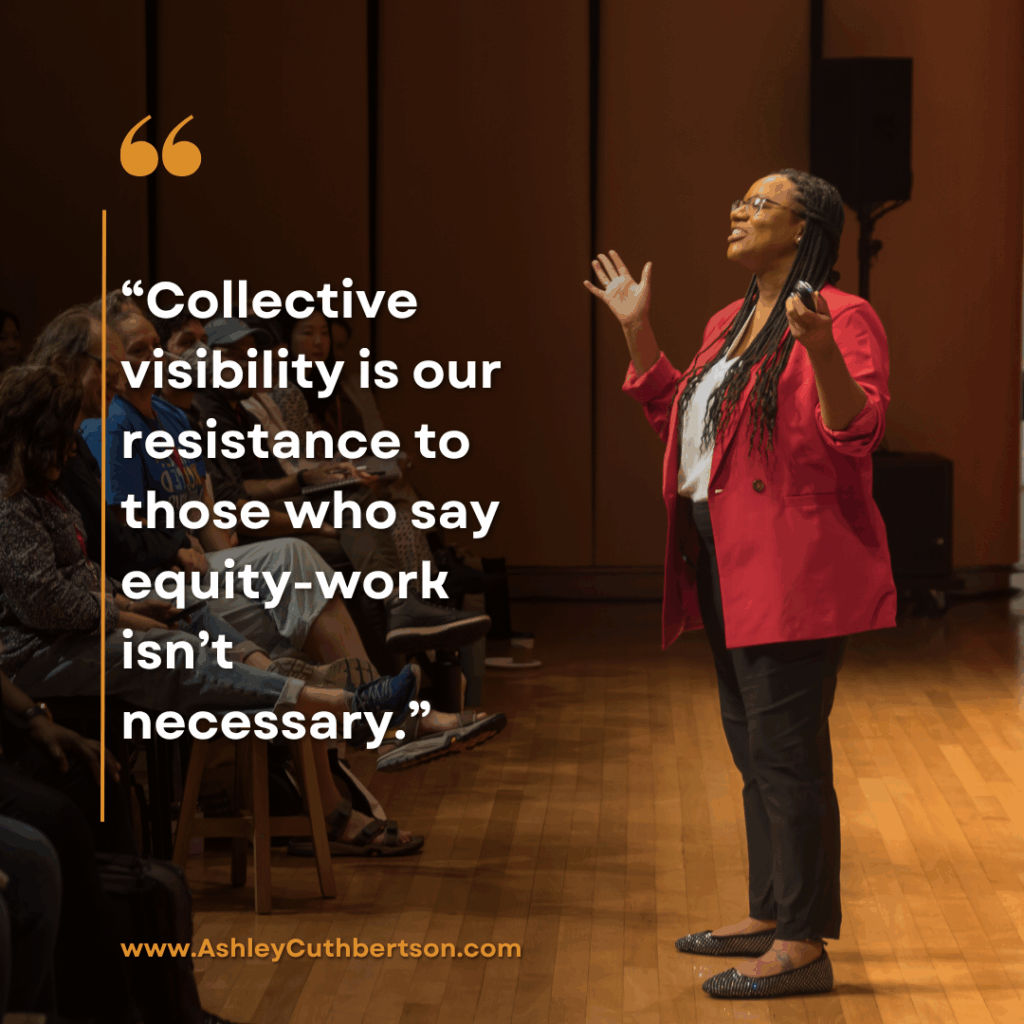
Collective visibility is our resistance to those who say equity-work isn’t necessary.
It’s how we sustain momentum when others want to turn the volume down on equity. It’s how we remind ourselves, our and the field, that culturally responsive arts education isn’t a trend. It’s the foundation for belonging, creativity, and transformation.
Year Two: From Momentum to Movement and the Work Ahead
If year one was proof of concept, year two is about growth and grounding that growth in systems.
This next season is about making the Music As a Vehicle framework even more accessible: expanding professional-learning offerings, licensing professional learning curriculum workshops, and developing resources that help arts leaders operationalize equity across their programs.
Because at the end of the day, Music as a Vehicle isn’t just a book you read. It’s a framework you implement. It’s a roadmap for culturally responsive arts education — a guide for reimagining how we design, teach, and lead in ways that center every learner.
Systems-level change doesn’t happen by inspiration alone. It happens when we build the infrastructure around the vision.
So whether you’re a district arts supervisor, a university professor preparing the next generation of teachers, or a classroom arts educator leading change from within — this work is for you!
My goal is that every arts educator in the country knows this framework — whether or not they ever buy the book — and that every leader knows there’s a clear path to move from ideas to impact.
If you’re an arts leader ready to build systems that make equity sustainable, I’d love to connect. Let’s build what’s next, together.
→ Learn more about my consulting services
→ Explore the Music As a Vehicle Hub
→ Read my essay “Why PD Alone Isn’t Enough”
About the Author
Ashley Cuthbertson, M.Ed., NBCT is the founder of A. Cuthbertson Consulting, LLC, a national partner helping schools and organizations reimagine their arts programs through a culturally responsive lens by providing support for curriculum design, professional learning, and leadership strategy. She’s also the author of Music as a Vehicle: A Practical Guide to Implementing Culturally Responsive Teaching in Today’s Music Classrooms.